Serving Tampa Bay Since 1988
(813) 684-9919

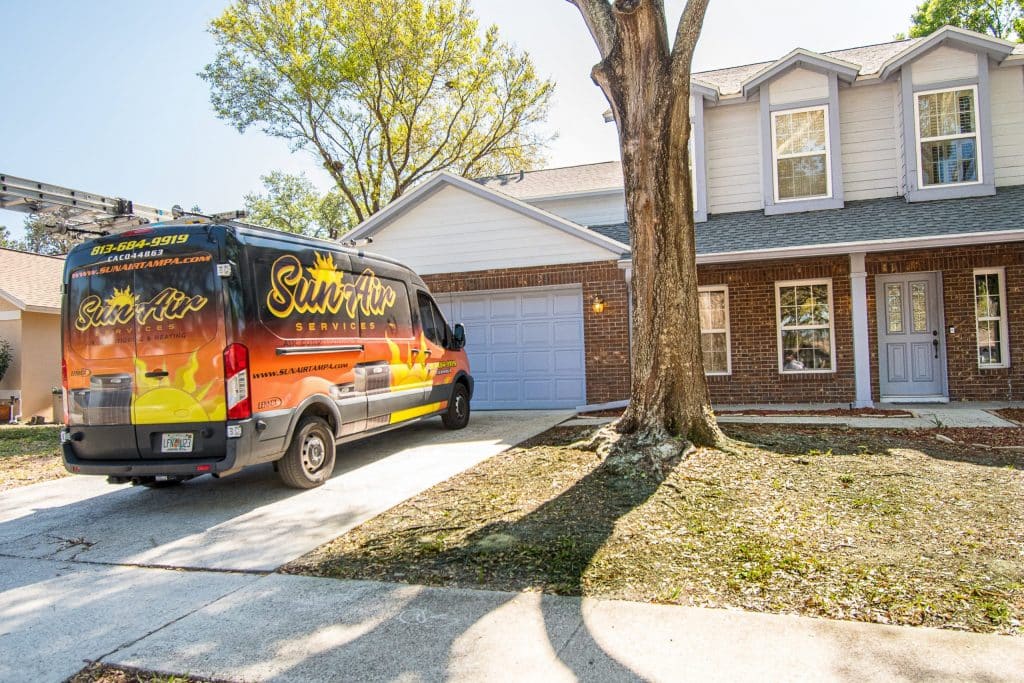
Heat pumps are the most efficient choice for Tampa Bay's climate. One system handles both heating and cooling year-round. Sun Air Services installs, maintains, and repairs heat pumps for homeowners throughout the greater Tampa area.
Unlike a gas furnace, which burns fuel to make heat, a heat pump moves heat from one place to another. That makes it two to three times more efficient than any electric resistance heater. In Tampa Bay, where freezing nights are rare, one heat pump handles summer cooling and winter heating without a second system.
One system replaces both your AC and your heater, with less equipment, lower maintenance costs, and a single warranty.
Heat pumps deliver two to three units of heat for every unit of electricity consumed, far more efficient than resistance heating.
We install Lennox heat pumps rated among the most efficient and reliable systems available in the U.S. market.
A heat pump is an air conditioner with one extra part, a reversing valve, that lets it run the refrigerant cycle backwards. In summer it cools your home exactly the way a standard AC does. In winter it pulls heat from the outdoor air and moves it inside.
A lot of Tampa homes already have one and the owners do not know it. If your thermostat has an Emergency Heat or Aux Heat setting, you are almost certainly looking at a heat pump with backup electric strips in the air handler.
The other common setup here is a straight cool system: an air conditioner paired with electric resistance strips for heat. Strip heat works, but it turns one unit of electricity into one unit of heat. A heat pump moves two to three units of heat for the same electricity.
We will be straight with you about what that is worth. Tampa only needs heat for a few weeks a year, so the heating savings are real but modest. The bigger reason most homeowners choose a heat pump is that it costs little more than a comparable AC and covers both seasons with one system.
Our mild winters are also where heat pumps work best. January nights here average in the low 50s, well inside the range where a heat pump runs at full efficiency. The backup strips only need to help out on the occasional cold snap.
The biggest factor in how a new heat pump performs is whether it was sized correctly. The right size comes from a Manual J load calculation, which accounts for your square footage, insulation, windows, duct location and the direction the house faces.
Matching the tonnage of the old unit is the shortcut a lot of installers take, and it is often wrong. Many Tampa homes have had new windows, added attic insulation or an enclosed lanai since the original system went in, and the right size changed with them.
An oversized heat pump is the more common mistake, and in this climate it is the more expensive one. It cools the air quickly and shuts off before it has run long enough to pull moisture out, so the house reaches 74 degrees and still feels damp.
That is why two-stage or variable-speed equipment is worth considering here. These units spend most of their time at low capacity in long, steady cycles, which removes far more humidity and keeps temperatures even from room to room. The price difference is worth seeing side by side before you decide.
Heat pumps carry two efficiency ratings. SEER2 measures cooling efficiency and HSPF2 measures heating efficiency, and higher is better for both. Since 2023 the federal minimum for a new split-system heat pump has been 14.3 SEER2 and 7.5 HSPF2.
In Tampa, SEER2 matters far more than HSPF2, because your system spends most of the year cooling. Ask for the estimated operating cost at each efficiency level for your home, so you can judge whether a higher tier earns back its price.
If Tampa Electric supplies your power, a ducted heat pump rated 16.2 SEER2 or higher qualifies for a $550 rebate, and one rated 15.2 SEER2 qualifies for $40. The participating contractor takes the rebate off your invoice. Ductless mini-splits are not eligible.
The federal tax credit for heat pumps ended for systems installed after December 31, 2025. Some websites still advertise it, so if a quote leans on a federal credit, ask about it before you sign.
New systems installed today use the newer A2L refrigerants, R-454B or R-32, in place of R-410A. If your current heat pump runs on R-410A it can still be serviced and recharged, so the change is not a reason to replace a system that works.
If your electric bill jumps in January, the heat pump may not be doing the heating. When the outdoor unit fails or falls behind, the system leans on its backup electric strips, which use two to three times the electricity to produce the same warmth.
Common causes are a failed defrost control, a low refrigerant charge, a bad reversing valve, or a thermostat that was switched to Emergency Heat and never switched back. Each one shows up the same way: a house that stays warm while the bill climbs.
A quick check is to look at the outdoor unit while the heat is on. If the fan and compressor are not running, or the coil is buried in solid ice, give us a call. We will find the cause and get the heat pump carrying the load again.
Full heat pump system install including air handler, outdoor unit, refrigerant lines, electrical, and thermostat.
Replacing an old heat pump or converting from a gas system? We handle the full changeover with proper load calculations.
We diagnose and repair all heat pump problems: reversing valve failure, refrigerant issues, defrost problems, and more.
Twice-yearly maintenance keeps your heat pump running at peak efficiency in both cooling and heating modes.
The reversing valve or refrigerant charge are typically responsible when a heat pump won't produce heat.
If your system has switched to emergency/auxiliary heat permanently, the heat pump itself needs diagnosis.
Some frost is normal in winter, but a solid block of ice usually indicates a defrost board or refrigerant problem.
A heat pump that turns on and off rapidly has an efficiency, sizing, or refrigerant charge issue that needs immediate attention.
Most heat pumps here last 10 to 15 years. A heat pump in Tampa runs in both seasons, so it logs more hours than an air conditioner up north. Twice-yearly maintenance and a clean outdoor coil are the biggest factors in reaching the top of that range.
Not for cooling. A heat pump and an AC with the same SEER2 rating use the same electricity in summer. In winter the heat pump is much cheaper to run than the electric strip heat paired with most Tampa air conditioners.
It depends on the size of the home, the efficiency tier, and whether ductwork or electrical changes are needed. We give you a written price before any work starts. Financing is available. Call (813) 684-9919 to schedule an estimate.
Tampa Electric customers can get $550 back on a ducted heat pump rated 16.2 SEER2 or higher, or $40 at 15.2 SEER2. The federal tax credit for heat pumps ended for systems installed after December 31, 2025.
During a defrost cycle a heat pump briefly reverses to melt frost off the outdoor coil, and the air can feel cool for a few minutes. That is normal. If it blows cool air for longer, the reversing valve, refrigerant charge or defrost control usually needs attention.
Yes. Sun Air Services is licensed under Florida HVAC contractor certification #CAC1820634, and all technicians are NATE-certified. We carry full liability and workers' compensation insurance on every job.
"Sun Air replaced our old AC with a Lennox heat pump two years ago. First winter we ever used the heat, it worked perfectly. Electric bill actually went down compared to our old window units and space heaters. Great team."
Same-day service available throughout the greater Tampa area.
Call now or schedule online — we're available 7 days a week.